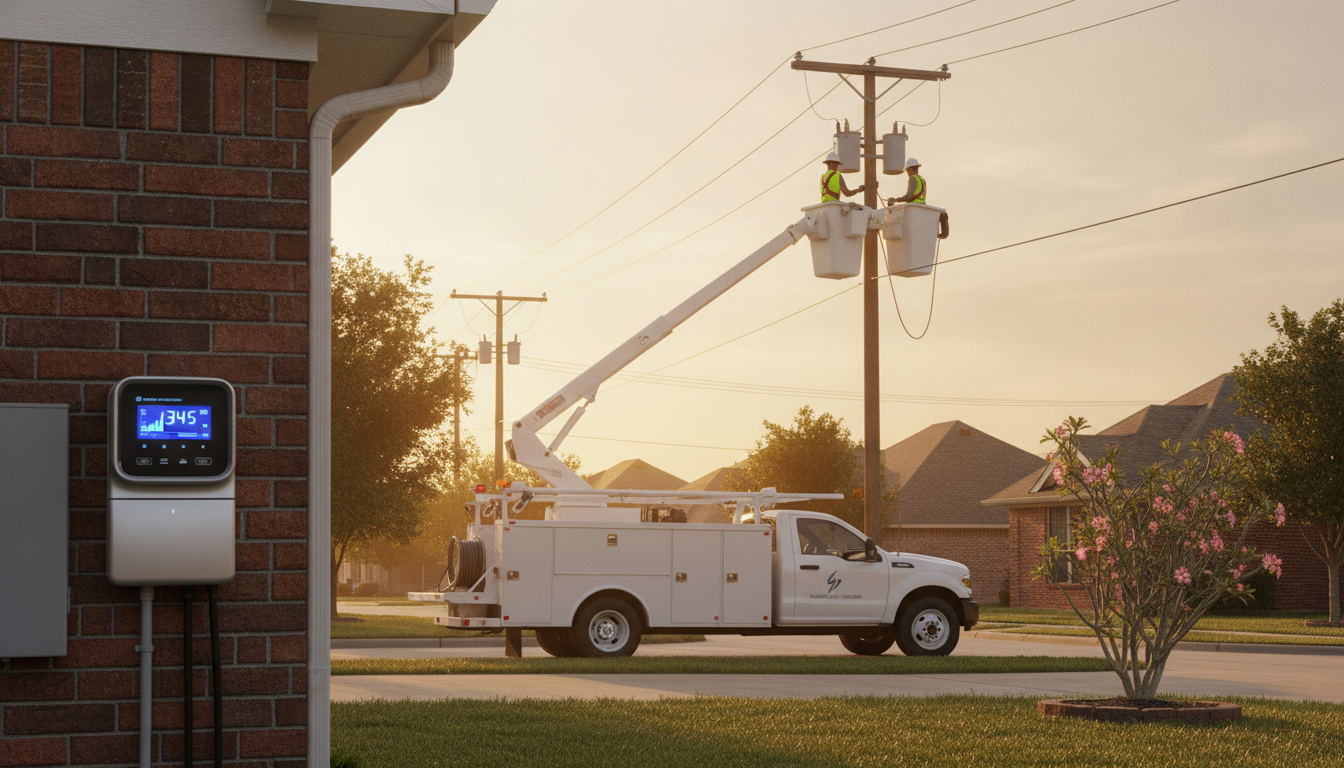


For Texas residents, understanding your electricity bill can sometimes feel like deciphering a complex code. Between your retail energy provider and the underlying infrastructure that keeps your lights on, there are distinct layers of service and cost. This guide will clarify a crucial distinction often overlooked: the difference between your billing provider and the regional wire managers like Oncor, and how their essential, state-regulated delivery fees directly impact your daily energy costs.
Decoding Your Texas Power Bill: Retailer vs. Regional Wire Manager
In Texas’s deregulated ERCOT marketplace, you enjoy the freedom of “Electric Choice” – the power to select your retail electric provider (REP). This is the company you pay for the electricity you consume. However, there’s another, equally vital player in the game: your Transmission and Distribution Utility (TDU). For many across North and West Texas, this TDU is Oncor.
Think of it this way: your REP sells you the fuel (electricity), but your TDU, like Oncor, owns and maintains the roads (the power lines, poles, and substations) that deliver that fuel to your home. You choose your REP; your TDU is assigned based on your geographical location.
Oncor Utility Delivery Fees Explained: The Unseen Network
Oncor’s role is monumental. They are responsible for the physical infrastructure that brings power from the generation plants to your meter. This includes:
- Maintaining thousands of miles of transmission and distribution lines.
- Repairing equipment after storms and managing outages.
- Clearing tree limbs that could interfere with power lines.
- Upgrading the grid to handle Texas’s booming population and increasing demand.
To fund these critical operations, Oncor charges state-regulated